#366 香农·柯里:德普与希尔德庭审、婚姻、约会与爱情
#366 – Shannon Curry: Johnny Depp & Amber Heard Trial, Marriage, Dating & Love
官方音频00:00 / --:--
已从上次位置继续 · 下载 MP3
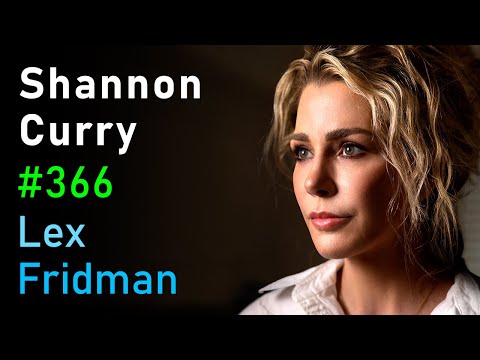 ▶ 播放视频
文稿由本站用 Qwen3-ASR(基于官方发布音频)机器转写,可能有识别错误,人名与数字请以音频为准。
Lex Fridman Podcast #366 - #366 – Shannon Curry: Johnny Depp & Amber Heard Trial, Marriage, Dating & Love
Machine transcription by Qwen3-ASR 0.6B (MLX, local, Apache-2.0). May contain recognition errors.
The following is a conversation with Shannon Curry, a clinical and forensic psychologist who conducts research, therapy, and psychological evaluations pertaining to trauma, violence, and relationships. She received worldwide attention in April of last year by giving a lengthy televised testimony on her psychological evaluation of Amber Heard during the Johnny Depp Amber Heard trial. I found her testimony to be an eloquent description of complex psychological concepts and evaluations procedures. So I reached out for a chat. In person, she was brilliant, funny, thoughtful, and truly kind. I really, really enjoyed this conversation. Now a quick few second mention of each sponsor. Check them out in the description. It's the best way to support this podcast. We got Factor for nutritious and delicious pre made meals, BetterHelp for mental health, and House of Macadamias for delicious snacks. Choose wisely, my friends. Also, if you want to work with our team, we're always hiring. Go to lexfreeman dot com slash hiring. And now onto the full ad reads. As always, no ads in the middle. I try to make this interesting, but if you must skip them, friends, please still check out our sponsors. I enjoy their stuff. Maybe you will too. This show is brought to you by a new sponsor, a delicious sponsor called Factor. It's a ready to eat meal kit service that delivers nutritious and delicious meals straight to your door. That phrase is a ridiculous phrase, but that is what it does. So I use it mostly for my kind of diet, but it supports all kinds of diets. So I'm mostly keto, and they have a bunch of amazing keto meals that center somewhere around like 500 calories. First of all, they're delicious in the variety they provide for the keto stuff. They keep the carbs low. It's really really delicious, and the variety it provides makes it so that I don't have to think about anything and I can enjoy at an affordable price. Deliciousness in my life that's varied throughout the week and I still keep to a low carb count. This is probably the most efficient, the most delicious, the most affordable way to have variety of foods on a keto diet and all kinds of other sort of quote unquote smart diets that they have protein plus whatever vegan plus veggie all that kind of stuff. Get Factor and enjoy clean eating without the hassle. Go to factormeals dot com slash lex fifty and use code lex fifty to get 50 off your first box. That's factormeals dot com slash lex fifty and use code lex fifty. This episode is sponsored by BetterHelp spelled H E L P Help. Obviously, this is a good episode for BetterHelp to sponsor because Shannon is a great psychologist. I learned a lot from her testimony from our on and off the mic conversations from her interviews. She's so eloquent and clear in explaining some pretty complicated psychological concepts because there's a lot of gray area in how you identify the different disorders, the different things that might be right and wrong with our minds and exploring that area. All the gray areas within that with clarity that the terms aid in understanding versus limit you by putting you into a particular kind of bucket and exploring all that kind of stuff especially in the context of relationships. She's brilliant. She of course does all kinds of therapy and reviews both for PTSD for couples therapy all that kind of stuff and it just shows that lifelong taking seriously your mental health with partners your mental health alone is really important through the act of talking it out with licensed professionals and that's what BetterHelp provides and makes super easy. Check them out at betterhelp dot com slash lex and save on your first month. That's betterhelp dot com slash lex. This show is also brought to you by House of Macadamias, a company that ships delicious, high quality and healthy macadamia nuts and macadamia nut based snacks directly to your door. Small portions, healthy, delicious. I don't just eat them myself. I also share it with guests with friends when they come over. I think it serves as a good icebreaker. There's something about human beings that just love connecting over some food. That's what I've been using it for. But let's be honest actually, most of what I've been using it for sitting on the couch, feeling content, appreciating the seconds as they take by, and putting some macadamia nuts in my mouth. Yes, I said a friend's. It's the only nut rich in omega seven. So there's a bunch of reasons that it's healthy for you. There's all other kinds of positive stuff I could say about it besides it being delicious that it's healthy. But you should try for yourself. Go to house of macadamias dot com slash lex to get 20 off your order for every order not just the first. The listeners that's you will also get a four ounce bag of macadamias when you order three or more boxes as you should of any macadamia product. That's house of macadamias dot com slash lex. This is the lex Friedman podcast to support it. Please check out our sponsors in the description and now dear friends here Shannon Curry. Charles Bukowski said that love is a fog that burns away with the first daylight of reality. I love that quote. Do you think romantic love fades away in this way? Bukowski does it does it have to fade? The truth is that you have all of these chemicals pumping through your body. You're essentially high on heroin in the beginning of a romance, and you're going to have these rose colored glasses on everything your partner does is magical. But really, it's the novelty. It's just like going on a vacation. You're fully present. You're just attuned to the magic of another human being moment to moment, and then on top of that, you have you're just flooded with dopamine. So you're high on drugs and we can't go on like that. You will die if you are using these kinds of chemicals all the time all day long. So eventually our bodies are sort of made to dial it down. We've made it. I mean, we're evolutionary beings. We are doing the same thing we did 200,000 years ago to find a mate, procreate, spend enough time with each other that we have sex a whole bunch of times and make babies. Now we've changed the rules of the game. We're living you know almost tell we're 100 years old in some cases we're making these marriage commitments that last half a century and we're expecting it to be all because of love and we're signing these contracts based on how we feel when we're high on these drugs. So the reality is we know based on the and and I'm also talking about certain Western civilizations here because as you know there are arranged marriages and a lot of times those marriages if we're looking at longevity are actually way more satisfied than people who are marrying for love which logically makes sense if you're making a decision based on a feeling that is basically based on endorphins and dopamine and oxytocin. I wouldn't sign a contract just because of a feeling, necessarily. You know for 50 years, whereas an arranged marriage if you have your elders kind of deciding for you that this partner has a bunch of traits that you're going to appreciate more and more over time. I think there's some wisdom there. So you don't think that feeling could be a foundation for a 50 year relationship? Well, I don't think that specific feeling you're having based on drugs. Is going to be the same feeling you have 20, 30, 40 years down the line if you're going to wake up and turn to your partner when you're 70 and think, oh my god, I'm so glad you're hot, you are so hot. Then sure, marry for hotness. But if you've been through life a little bit and I think most people who are on a second marriage know, shit happens in life. It is hard you're going to have you know maybe a kid with special needs or your dad gets dementia or you get diagnosed with cancer. Who are you going to want to come home to? Who is going to hold you when you are sobbing on the floor and tell you we're going to get through it together? Who's going to know the names of your kid's special ed teacher and the process for getting a 504 plan or is it going to be you on your own? I think those things matter. But doesn't that hotness? Don't those drugs kind of solidify into a deeper appreciation of the other person into something you could call beauty. Yes, they can. But but isn't that the same isn't that the same thing when you know when you notice the beauty of another human being aren't you aren't you high on drugs still you're making it sound like there's like a brief rock star period of going on heroin and then it's over but like can't you be on heroin your whole life a little. I have some good news. I have some good news that was something I think one of the reasons I got into studying relationships was because I wanted that right so I'm a scientist but I also love art and I love writing and I love literature I wanted to know that true love could be real but as a scientist I am cynical I just need some data and when so I practice a type of therapy called the Gottman method and I love that because it tends to be well it is one of the most evidence based therapies we have based on John and Julie Gottman two psychologists who have been researching relationships for now about 50 years and this therapy happens to be for couples they found that you absolutely can make longevity work in a relationship you can build you are not just settling for companionship but you can have passion and intimacy and growing love and appreciation but there is a blueprint a set of skills that we were never given we're not taught it in school we change the rules of the game and we haven't learned the rules yet and the Gottman method for couples therapy kind of gives you a few guidelines the rules for longevity in a relationship yeah they did a beautiful job at taking these findings they had through you know decades of research quantifying it and then codifying it into a therapy method it's really skills based I tell couples when they're starting out with me that they're essentially going to be starting a class so what's the five to one golden rule what I read is this the kind of balance you can achieve of how many interactions you have in a relationship that are positive versus negative and I think that's what the five to one means but basically there should be kind of an empirical like if you just look back over over a month how many of the interactions were positive how many or the day look at the day right so the idea of this ratio well it's not an idea it was a finding it is a research finding that the Gottmans got after looking at thousands of couples and codifying these interactions that they were observing couples that tend to be satisfied in their relationships that are happier they have better health etc they are having approximately five positive interactions to each negative and I want to be clear about what I'm defining as positive and negative here so this doesn't necessarily mean that you're these don't need to be big sweeping romantic gestures buying flowers having sex these are things like paying attention to what we call your partner's bids we make these bids for affection for connection all the time in our relationships not just with our partners but with our friends our coworkers and we may not even know what our style of bid is but if you see them on a sheet you can pretty quickly identify them bids could be wanting to show your partner tell your partner something and have them be proud of you it could be wanting to go buy groceries with your partner doing things together hey you want to come with me it could be telling a joke and hoping that your wife looks up from her email on the computer and acknowledges it if she laughs then you got a positive but if I don't even look up that's a negative right so it's not necessarily that I'm calling my husband an asshole it's just am I connecting with him am I meeting those bids for connection and vice versa but do those also give you a guide of how you should behave well I think what's really important is actually asking your partner or paying attention to what your partner's bids are because what matters to tie my husband may not matter to you for instance I mean ties bar is so low with me I thank God in terms of what defines a positive interaction right like he just wants me to ask him if he wants a water when I get up to get myself one just be a basic decent considerate person is all he asks of me whereas mine might be sort of like stay up later with me watch a show go to bed at the same time as me or know about the people in my life that sort of a thing I should highlight this and I hope hopefully it's okay that you were running a little bit late and you sent me this text which is which people do really rarely and there's a subtle act of kindness within that text so the the text you sent was that I just decreased the amount of stress in your life or something like this by saying it's it's cool but that means that you were you're you're signaling that you were stressed because you care enough to be there on time and that was like that made me feel really special I was like oh you know people don't often people don't often don't always do that because that puts you also that makes you vulnerable and I actually thought that after I sent it but I feel that most of the day any interaction like ah god I just exposed myself but absolutely I was excited to be here and I didn't want you to think that I didn't care I think being a therapist has shown me that it really it's so lucky to be in that position because you meet people that you would have thought are cooler than you or smarter than you or just somehow impervious to life and you realize that we are all in it together we all want to be cared about and liked we all want to be liked as a baseline I some people will say they don't care but everybody does it's human and I have gotten much better being a therapist much more comfortable showing caring showing love and genuineness and vulnerability than I think I ever would have been otherwise and that kind of vulnerability is what's required to do a positive interaction in a relationship I think so and and people have different levels of comfort right so but as long as it's working for both partners and typically you have to communicate to figure out what your partner what makes your partner feel cared about however you might be working for instance with an older couple and I have a couple that's perfectly happy and they sort of have a system it works for them if there's some sort of a rupture if they get some sort of a disagreement they don't talk it out she might go to the store run an errand doing do a little shopping he'll work in the woodshop and then they'll come back and there is a repair attempt though but it's maybe she'll say hey do you want to have dinner come you know I made your favorite dinner and or he'll say hey I recorded your favorite show you want to watch it tonight so they don't need to process it but there is an understanding between them that we're still in this together we care about each other and there's a repair attempt most people need to be able to process it verbally and talk about what happened but not all so for most people if there's a conflict you should talk about and resolve it and repair it versus like just put it behind you I I don't want to say should I guess it depends on the couple everybody processes emotions differently everybody handles emotional expression differently I mean I have couples where I have one person in the partnership who has autism and the other doesn't and so they're obviously going to have different ways of communicating or processing what happened we all have different perspectives it really depends on what makes a person feel like it's been repaired what makes a person feel understood does that need to be verbal or in the case of that older couple I have where they know they understand one another because there's a gentleness toward one another after what are some common ways relationships fail that you've observed in all the therapy you've done well the Gottmans identified what they call the four horsemen of the apocalypse so what are the four horses I mean I could just keep it simple and go off their research so there those are four different behaviors that they identifying couples or that you can identifying couples that are really highly predictive of a divorce some more than others but I'll start with the lower ones so one thing that we by the way actually we all do these things these would be in that five to one ratio you'd want to stay away from some of these these are the ones so as they pile up now that ratio is going to get imbalanced and then you are headed for a split okay so the first is criticism so criticism is when we have a complaint complaints are normal but instead of owning our own problems our own feelings we assume that our perspective is the only valid accurate perspective and so we take it upon ourselves to tell our partner what is wrong with them okay so there there's essentially no real belief that they might have a valid perspective too so this could look like you never help me out and that with the house or even you're so lazy like can't I just get you for five seconds to help with the kids or something like that and then what happens is horseman number two defensiveness so not everybody is defensive just because they were criticized some people just are more prone to defensiveness than others none of us really like admitting our faults so it's pretty natural but defensiveness is essentially making excuses or worse turning it around on your partner um not accepting any responsibility and definitely not validating what they're feeling now if you get criticized enough or if you get really flooded the flooding is what happens when our heart rate goes up kind of around 100 beats per minute our frontal lobe shuts down that's our thoughtful brain our logical brain and our reptilian kind of hind brain takes over our thinking and we just go into fight or flight in a way we we just want to annihilate our partner instead instead of say anything that would be helpful to the relationship so if you're getting flooded you could do a couple things you could get super critical you could get contemptuous which I'll talk about in a second it's the last horseman or you do the third horseman which is stonewalling and in their research the Gottmans found that men are actually more likely to stonewall I also am someone who stonewalls but it's where you just sort of disconnect from the conversation you shut down you turn away you can physically even turn away kind of arms cross but you're just you're shut off and stonewalling happens usually because you get flooded you feel like you can't win you don't know what to do to make the situation better it feels pretty hopeless and Talking feels unproductive, so you can see how in a typical heterosexual relationship the gender dynamic. We know that women tend to use criticism more often because they're the ones that typically raise issues verbally, and then if men are feeling more criticized, that they tend to stonewall and it becomes this vicious cycle of then more criticism. But the criticism is really just a plea to be loved and get your partner to show you they care, and then the man tends to feel like he can't do anything right. This isn't even productive if I say anything I'm just going to make it worse, and they don't have any real you haven't given them a specific need a solution something they can do to shine for you so they turn away. And where is the contempt? All right, so contempt is criticism on steroids. This is what John Gottman calls sulfuric acid for love. Nothing will erode a relationship quicker than contempt. Contempt is when you are looking at your partner from a superior position. So you are eye rolling, you are name calling. There's a mockery mocking even physical mockery imitating them imitating their voice. Contempt is meant to just take the legs out from your partner, make them feel pathetic, ridiculous, and it can be abusive. But most people have engaged in contempt at some point in their relationship. Lower level would be sort of the eye rolling, but that is the biggest predictor of a split. If you allow yourself to think, yeah, that mockery or contempt just a little bit, it's like this weird slippery slope. Sure is, and the opposite is true. Where I just look at a person, think, wow, isn't that the most like wonderful creature I've ever seen in my life? Like just think that and you notice the little details about who they are. That's why just observe them the way you observe like a weird like peacock at a zoo or something like that. Intention is powerful, isn't it? Yeah, and it changes. You start to notice beautiful things and then let the things that annoy you. Yes, like just you're exactly right. You're touching on some really important things. So in relationships, we actually know that wearing rose-colored glasses is important. It's healthy. We need it, and it's a choice you're making right. So there is a saying that getting married is just choosing one person's faults over another, and the reality is that we may become infatuated with somebody else as human beings. Love is an emotion, attraction is an emotion, an emotion, and as you go through life, even if you're in a committed relationship, you might see beauty in another, and that person who is novel might seem attractive to you. But if you can remember that they too have a set of problems that you would be marrying, it really helps you to see the beauty in your partner again and recognize all of their incredible strengths and all the ways we meld with a person and become our own family. Almost become. I mean, our lives intertwine and we grow those oak trees. So by the way, there's a line I read somewhere that when you're wearing rose-colored glasses, all the red flags looks just like flags. I think it's a good it's a good line. So you think that humans are fundamentally all of us are fundamentally flawed or have flaws. They're unique flaws and that basically relationships is just the way to figure out how the two can fit together. Right and we're different so no matter what we're going to have differences. We are raised differently than our partner. We have different stories, different experiences that shaped our value systems, especially when it comes to the big ones like parenting, love, money, these principles that are based in our history. We're going to have differences. So is this a set of differences you can accept from somebody and work with? Do the benefits and do their strengths? Do they make it worth it or is it are they deal breaker differences? Tricky question, but in the in the couples you've worked with, is there like the feminine and the masculine? Is there different dynamics that come to play like dominant submissive? Is there is it like a dance where it just changes from minute to minute? Is there is there dynamics you observe that both limit and enable successful relationships. Yes, so there are if we're talking about masculine feminine, then how also are we could get into are we talking about actual gender identified gender or are we just talking about these traits because like I said I stonewall which is typically in couples something that is more associated with straight men. But that's my style of coping when I get overwhelmed. That is not tied to any sort of success or non success of a relationship, but what we do know is that gay couples so lesbians and gay men tend to be gentler with one another when they are having conflict discussions. I. So that's actually been identified in the research and it's something I've witnessed and it's just fascinating. So with my straight couples, I'll be going through one of these. If we're processing a conflict that occurred, I'll be going through the sheet and it's very very structured because you don't want couples doing more damage when they're there with you. You want them practicing skills that protect them from criticism that protect them from contempt. And when I'm working with a straight couple, I am like a referee or sometimes I'll relate it to being like a ski coach and keeping people on a bunny hill and you tell them you let them make like two turns and then you stop them and you meet up again because you don't want them to veer off. With straight couples, you are doing very short turns before you need to kind of intervene and rescaffold. I had a lesbian couple recently and they were so lovely with each other. They skipped like seven steps to the advanced final portion where they were already coming up with solutions and suggesting things that they might be able to do differently next time to make it better for their partner. They were asking each other questions about how their partner felt with no agenda, no attempt to sort of be like, well, do you think you're feeling that way because which straight couples do all the time. You just see this humility and openness. It's lovely. Yeah, it's lovely. But I wonder if maybe watching too many Hollywood films if some of the drama some of the tension is required for a passionate lifelong romance. No, it's not, and that's great news. So we actually know that the closer you feel to your partner. So if I mean you've talked a lot about beauty and you can ignite that beauty that interest right. So when you're falling in love, it's usually that a person is sort of a mystery to you and you're uncovering these layers that you find really appealing. There are continual layers that you can uncover with your partner over time. I don't think we realize that I think we get complacent and we think we've had every conversation imaginable. What what else are they going to do to surprise me? But we don't know the questions to be asking. One of my favorite questions, I like turning these conversations kind of into a quiz because I get bored easily. So rather than just asking an open-ended question, there's a way you can do this with your partner where it's sort of like the dating game like. What is my as of yet fondest but unrealized life dream and see if your partner knows you might not even know they might know you better than you know yourself that in and of itself is a beautiful reminder of the relationship and how special it is. But then also when they say it or when you realize or have to think critically like what is my husband's as of yet unrealized but fondest life dream and then you can talk about it. You just I don't know you just kind of transcend into this new area and you feel tight again you feel like you feel close. Well, you really talk to each other like I have I've recorded and without intending to publish podcasts like this with microphones with with friends with people close to me because it's literally that you get to ask questions like as if it's an interview. Right, and we don't do that exactly it the way you're talking with me. Yeah, sit down with your partner, have that conversation like years later. Right, show interest, actually be curious, see see what they surprise you with and actually what you learn is you don't know the answers to most these questions. One hundred percent exactly. Like like what what's your favorite movie from the 80s? You might not know the answer to that. It's like those first date questions or whatever. Or what's your favorite movie this year and why and why? Yeah, it's fascinating. It is. It's hard to do that because I think you'll probably be offended at first how little the other person knows. So I think you have to work through that. You know I actually find that there's this rekindling because partners are shocked that their partner does know so much about them, especially if they've been feeling dissatisfied or disconnected. It's a reminder of all the good that's still there. What I know we said some of those things but what's on the opposite side? What's the key to a successful relationship? What's like what are the things you see time and time again that to you designate that they're on a good path. Yeah, there's a real attunement honestly just it's sort of an us against the world feeling. Nobody neither partner is going to talk shit on them. The other there's a loyalty. They handle each other in the relationship with care. You can tell that they've worked some things. To me, it usually indicates that these are some people who have figured they've had to work some things out. They know that this is delicate. They know you know that you're on thin ice. You take a wrong step and you can be back in a tough place in your relationship or you treat it with care and it can be amazing. So they're careful with one another. They give each other compliments. They are considerate. So you'll see you know he'll bring the car around for her because it's raining or. She'll bring him home some takeout. You know she'll order for him too at the restaurant. There's just they keep each other in each other's minds. But that us against the world thing that definitely is there like one hundred percent you've seen that right yeah you've seen it and you've seen it like I like it when couples have been together for a long time and when one is talking the other one looks at them. If you don't do that, that's not a bad sign. But it's a good sign when you do that. Yes, because and I think it's actually a really good exercise to do because I because I enjoy when I see in others. So it's it's a it's a way to show that you don't take them for granted and then you still find them like this mysterious wonderful creature to observe like. I think too often we have that with our parents we have that with people close to us you think yeah I've heard what they're about to say I know I know you can complete that sentence take them for granted and then if you if you just look at them and say wow this is the most brilliant person. I've ever seen in my life. Most I can't you know just appreciate every word that comes out of them and look at them in that way you actually begin to believe it and you actually begin to see the beauty of what they're saying. You are exactly right. It's a self fulfilling prophecy. And they're really caring. Yeah, it's very caring. So that's I mean that's I think the beauty of what the Gottman research showed us taught us provided us is that we can do these things that become cyclic and just keep growing this relationship making it stronger more powerful more loving. You would never want to cut it down. What we you were talking about the sheet for conflict processing. What are we talking about? So like a couple will come and say like there was this conflict and you put on the table and then what does it mean to process it? So in that Gottman method of therapy there are all these different I mean hundreds of different interventions and based on what the issue is in that session you can decide the most appropriate intervention. And so this is a specific intervention for if it is a conflict that occurred and there are different types of conflicts so this would be more like an incident. It's not a perpetual recurring problem which has actually a different intervention where you kind of look at the underlying belief systems values and there's the goal is not to solve that problem. The goal in that situation is to actually just get a better understanding of each other and your positions and just. You stop seeing your partner as the adversary and you start seeing them as a person who makes sense. But if there's been a specific event a specific fight that's just sort of situational. But it's left bad blood. Things were said or you didn't feel understood. This intervention I was talking about is one that you would go through a series of steps where first you identify the emotions that you were feeling. Then you describe play by play your movie your perspective. If your partner were looking through your eyes, this is what they heard, saw, thought. Then they saw this, then they heard this. So you're not saying yeah then you came in we're yelling and acting crazy. You're saying so then I saw you come in. I heard you say and I thought to myself well great now everything's ruined right so you're showing them your movie then they have to summarize the movie for you and then vice versa. And then there's this step where each person validates some part that they can understand like based on what you saw heard I can actually understand how you felt one of those feelings that you said. Then my favorite part is you rewind sort of the movie. From that day back through into childhood and you land on a time a memory when you felt a similar set of feelings. And this is like the most beautiful part ever because let's say the feeling was I felt misunderstood I felt misjudged, uncared about, unloved like you didn't even like me. And I'll say when did you feel that way you know land on a time and they're like my whole childhood you know my parents my mom was always accusing me of doing things I wasn't doing and it would set me up and my dad would come home you'd hear about it you would just believe her. And then you have like a partner climbing up on the couch like give their partner a hug while they're sharing the story. It's beautiful and it changes the way you interact in future disagreements. So you have those moments. Yeah, you can't unlearn. Now you know this about your partner. You know what they're sensitive to. Yeah and again you kind of see the the beauty and the flaws then. Right, it all makes sense. Yeah, it all kind of makes sense. Yeah, so you maybe were in this dumpster dive in your head of how your partner sucks and all the things that are wrong with them and it's so hopeless. And then you get this light shining through and you realize oh my god of course they would be sensitive to that. And suddenly it's not about all the ways your partner is wrong and proving that they're wrong. It's just how can I in the future make sure they do not feel this again. I would never want this person I love to misunderstand me and feel so unloved. What are you? The early days of that. What do you think about the whole dating modern dating process? How do you find a partner that you can stay with for the rest of your life? So we are absolutely doing it wrong, and but there is a way you can do it and I am such a fan of this psychologist Taito Shiro. I adore him. He is brilliant. He's lovely. He's also very humble. Just a wonderful salt of the earth guy. I'm going to tell you a very true story here. Okay, go. I was in a bad relationship and I was at a psychology conference with my partner at the time. We were both at this conference and we were sitting in a lecture hall there for Taito Shiro to do his talk that day on his phenomenal research on relationship satisfaction and dating. And I'm sitting next to him and we had been you know it was just always unpleasant on trips there were always fights. We're sitting there and Taito Shiro starts talking about his research and how he found that most people are you know signing this agreement getting married and doing it based on the love endorphins and really only about 35 of anybody who's married is actually happy. And he said so then you know and a pretty low number exactly but here's what I love about Taito Shiro is he didn't stop there he wanted to know what those people who were happy had in common. And then same thing with the people who were unhappy. He found a couple fascinating patterns. So the couples who were happy tended to rate their partners higher in three different traits and I love talking about this because if you are somebody who can follow instructions, you can find this. I mean very easily. Those three traits tend to be conscientiousness. Okay, and I love the word conscientiousness because it's not just kindness. Kindness is a good way to think of it, but you can be kind and kind of be a pushover and that's not attractive. Conscientiousness is smart, attentive. It's somebody who reads into a text message and thinks wow she was making herself very vulnerable there. That's conscientiousness. I like how you just threw in a compliment. No, but it's true. It's a certain intelligence, awareness, and attunement. And then on top of that, conscientiousness is motivated. So you can't be on your ass all day and be conscientious because then you can't meet the needs that you anticipate about the person. So conscientious is that guy who drives the car around in the rain storms so his wife's hair doesn't get matted. It's my husband who checks my alarm for me every morning because he knows I'm terrible at time management and he makes sure that I said it a reasonable amount of time before my first meeting and not the 20 minutes I think I need. And then he'll come wake me up with a cup of coffee. That is ultimate conscientiousness, and it is true. I mean, I will tell you as somebody who's with a conscientious partner, your love increases over time as you continue to feel grateful and admiring of that person. The second one, you want somebody who is low in a big five personality trait called neuroticism. You want somebody emotionally stable in a way. Now this doesn't mean you can't have somebody who doesn't get the blues or struggle with mental health issues. Trust me, Taito is with somebody who you know I get I'm all over the place but. You want somebody who kind of owns their shit and isn't going to just be emotionally unstable all over. You know you want somebody who is generally happy and has some life satisfaction. Um. Having a partner who has serious, not mental health issues but unmitigated emotional distress and instability is really hard on the partner and it's really hard on other family members including children if you have children. So it's just a predictor of happiness. So there's a certain threshold of chaos that if you exceed it is going to be destructive to a long term relationship. A perfect description. But then chaos, not the mystery chaos you love as your with your full poet brain. I'm talking more like just somebody who there's just no peace, there's no peace, there's a problem with everything, everything becomes more difficult going to a party is a chore, you don't know if they're going to have a meltdown at the party or how many complaints about your friends or everything is a problem. So you want somebody who has just some resiliency, I think is a good term for it, some flexibility, some spice is okay but not too much, right flexibility, resiliency, easy going. Yeah, okay. The third is really interesting. I think so. He found that having a partner with sort of moderate adventurousness, not high adventurousness, actually leads to greater greater satisfaction and the reason for that is high adventurousness equals novelty seeking. Shiny new things
本集资源与出处
- 视频在 YouTube 收看
- 音频官方 MP3 直链来自 lexfridman.com 官方播客 RSS
- 官网Lex Fridman 官网本集页面
- 文稿本站纯文本版