#478 斯科特·霍顿:反战立场与军工复合体
#478 – Scott Horton: The Case Against War and the Military Industrial Complex
官方音频00:00 / --:--
已从上次位置继续 · 下载 MP3
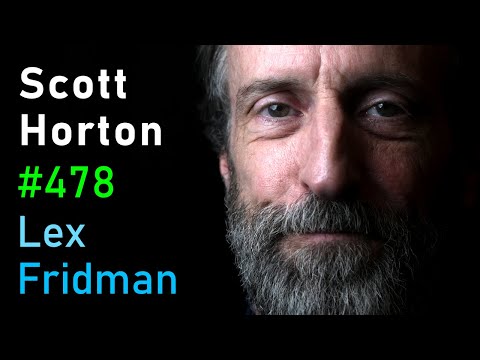 ▶ 播放视频
文稿由本站用 Qwen3-ASR(基于官方发布音频)机器转写,可能有识别错误,人名与数字请以音频为准。
Lex Fridman Podcast #478 - #478 – Scott Horton: The Case Against War and the Military Industrial Complex
Machine transcription by Qwen3-ASR 0.6B (MLX, local, Apache-2.0). May contain recognition errors.
The following is a conversation with Scott Horton. He's the director of the Libertarian Institute, editorial director of Antiwar dot com, co-host of Provoked, and host of the Scott Horton Show, on which he has done over six thousand interviews since two thousand and three. He's the author of Provoked Enough Already and other books and articles that have over the past three decades criticized U.S. foreign policy, especially in regard to military interventionism and the military industrial complex. And now a quick few second mention of each sponsor. Check them out in the description or at lexfreeman dot com slash sponsors. It's the best way to support this podcast. We got Allio Capital for investment, Hampton for connecting with founders, BetterHelp for mental health, NetSuite for business management software, and AG One for my daily multivitamin. Choose wisely, my friends. And now onto the full ad reads. They're all here in one place. I try to make them interesting, but if you must skip, please still check out the sponsors. I enjoy their stuff. Maybe you will too. Oh, and to get in touch with me for whatever reason, go to lexfreeman dot com slash contact. All right, let's go. This episode is brought to you by Allio Capital, an investment app designed by people who understand global markets and the macroeconomics of a world that is increasingly becoming divided, politically, socially, and economically. Allio is powered by Altitude AI, which identifies shifts in inflation, interest rates, and global risk, and based on that, adapts portfolios in real time. I used it; took me a few minutes to set up. It is obviously the future that AI should be integrated deeper and deeper in your investment processes, whether you are hands on or hands off investor. I am very much hands off. Set it and forget it, and in that case, certainly AI needs to be part of the set it and forget it way of life. One of the things I've come to understand more and more that the twenty first century is not going to be defined by the economy of one nation. It is not going to be a unipolar world. It is going to be a large collection of nations cooperating and competing, trading and starting conflicts. And through all of that turmoil and tension, it is difficult to know what to do with your money, so you don't get screwed over. And that's why I am happy there is people like Allio that once again look at the global markets. Download their app in the App Store, Google Play, or text Lex to five eleven five eleven. That's Allio Capital. Text Lex to five eleven five eleven. Investing involves risk, including the potential loss of principal, past performance is not guaranteed results. See terms and conditions. Text fees may apply. This episode is also brought to you by Hampton, a private community for high growth founders and CEOs. I recently got a chance to have dinner a couple of times actually with a few CEOs that are local here in Austin and. Well, one I should say they're all incredible people, but two directly and indirectly through osmosis I begin to understand how difficult a journey a founder is of somebody that builds something in the world. How exciting it is, but also how challenging it is. And I think nobody really knows that. As well as other founders, and so you have to find ways to connect with other founders if you want to build something special in the world to get advice, to get strength, to get wisdom, to make friends. It's not enough to look online because online there is full of BS surface level information. Even talking to any of the LLMs is not going to be enough. The real conversations have to happen between founders between people who have been in the arena as the famous speech goes. I just speak with them privately behind closed doors and Hampton arranges that in person group meetings. The tight structure for the meetings and there is no performative bullshit. They understand how busy people are and they want to have extremely high value connections with people that are trying to build epic shit at a very fast rate. Groups are forming in many of the wonderful cities of the United States: New York City, Austin, San Francisco, LA, Miami, Denver, and other top cities nationwide. Stop messing around and go connect with other crazy people like you that want to build something awesome in this world. Find your group at joinhampton dot com slash lex. That's joinhampton dot com slash lex. This episode is also brought to you by BetterHelp, spelled H-E-L-P-H-E-L-P. They figure out what you need and match you with a licensed therapist in under forty eight hours. I think as we have learned from the GPT four O saga where people were in pain legitimately so when they were shut down they missed it. That shows that there is a real connection is being formed increasingly so with LLM systems. But there is nevertheless in the realm of therapy, sycophantic behavior in LLMs. So you really do need to connect with a licensed professional therapist, human. Therapist, if you want to work through some of the Jungian shadow, some of the corners of the darkness and shine a light on it. Over three hundred fifty million messages, chat, phone, video sessions, thirty five thousand licensed therapists, four point four million people got help through BetterHelp. So check them out at betterhelp dot com slash lex and save in your first month. That's betterhelp dot com slash lex. This episode is also brought to you by NetSuite, an all in one cloud business management system. I feel like there is a big business theme. So we already talked about the complexity, the hardship, the excitement, the turmoil, the madness of being a founder and creating something new in this world. But once you take those early steps of creation, you have to actually build up the machine at scales. The machine within the machine that makes the whole thing run. That does the financials, the human resources, the inventory supply, the e commerce if you do that kind of thing, and all the messy things that make a business run. For that, you have to use the best tools available. NetSuite is amazing for that. You should check out Reddit or anywhere else for reviews. People love it. Download the CFO's Guide to AI and Machine Learning at netsuite dot com slash lex. That's netsuite dot com slash lex. This episode is also brought to you by AG One, an all in one daily drink to support better health and peak performance. Anyway, I drink it for the multivitamin and for the deliciousness and it makes me feel like I have my life together. Otherwise, I feel like it's all falling apart. I am doing a lot of crazy physical stuff. I've been under a lot of strain mentally for a variety of reasons. That's life. I am sure as it goes on it will continue so and probably will get harder or at least the ups will get higher and the lows will get lower and then it'll be over too soon and maybe it'll be over tonight and tomorrow and I have to accept that and have to meditate on it. All of that is just the human condition. The best we can do is try to hold on and do the basic low hanging fruit of getting our vitamins and minerals, eating healthy, doing a little bit of exercise, trying to minimize stress and surround yourself with good people or at least see the good in the people in the situation that you are surrounded by. All of the things I contemplated as I sip on a cold AG One after a long run in the Austin heat. All of it—the run, the AG One, life, everything—the people I meet on the run. The whole thing just makes me truly happy. Anyway, they'll give you a one month supply of fish oil when you sign up at drinkagone dot com slash lex. This is the Lex Friedman podcast to support it. Please check out our sponsors in the description or at lexfreeman dot com slash sponsors. And now, dear friends, here is Scott Horton. I think one of the darkest and most disturbing chapters of modern American history is everything that happened around conducting the so called wars on terror. I think to me it was a wake up call. I think it was a wake up call to a lot of Americans in understanding and seeing the military industrial complex and seeing what the government's capacity is to mislead us into war and to continuously erode basic human freedoms. If I can allow me to list some of the estimates from the cost of war project from Brown University, just so we understand the costs of these wars. The post nine eleven wars in Afghanistan, Iraq, Syria, Pakistan, and Yemen led to an estimated nine hundred thousand to nine hundred forty thousand direct deaths and three point six to three point eight million indirect deaths. And the cost in terms of dollars was eight trillion dollars with two point two trillion on Afghanistan and two point nine trillion on Iraq and Syria and the result on every front as we'll talk about. I think it's fair to say they did not accomplish this purpose and in fact if we even just look at the human toll of the people of Afghanistan. I was also looking at the the numbers before the war and after the war. Percent of Afghans facing food insecurity went from sixty two percent to ninety two percent. Percent of children under five experiencing acute malnutrition went from nine percent to fifty percent. Percent of Afghans living in poverty went from eighty percent to ninety seven percent. So it was extremely costly for Americans and it was extremely costly for Afghans. As you do in your book Enough Already, can you lay out how the full history, the full context of how it is that the American people were misled into this war on terror that was so costly in so many ways. Yeah, first of all, thank you for having me again. It's great to be with you on the show. One important statistic that you could have mentioned from the cost of war project as well is thirty seven million people displaced from their homes. Right, and the same group, it was Lex. I am telling you, it was at least five years ago. God, it's the future now. It was maybe seven, eight years ago that they did a study that determined that thirty thousand American servicemen had blown their own brains out since then while one way or the other deliberately crashing their motorcycle or whatever it is. So talk about the cost of war. That's far beyond you know the actual deaths in the war. We had about forty five hundred in Iraq and about twenty five hundred in Afghanistan of just official airmen, marines, and soldiers on the ground killed plus contractors and all that. So that's speaking not just to the things that could be measured. But you can just imagine the the scale of suffering that's going on in the veterans' minds. Yeah, and you know what too, like you would have guessed this probably right. You probably know more about this subject than me. It was a New York Times headline I think yesterday was, oh my god, look at or maybe it was the Wall Street Journal. Look at this insane list of the kinds of drugs that all these depressed soldiers get put on. Here is fifteen different psychoactive drugs all to temper the side effects of the others and whatever. Where you know and then they say that this could lead to suicide because of course we know that right. They even have to say that on TV sometimes that some of these drugs cause suicidal or homicidal obsessions and this kind of thing that we know that's one of the side effects. So some percentage of these guys might have made it if the government healthcare system hadn't helped them in the end. Is another bitter irony you know. The whole thing is just you know you said we got nothing out of it. I I said half in jest but it is serious but it's also it shows by relief what a disaster is that the only thing we did get out of it. Like literally was advancements in prosthetic limbs for amputees, whether they lost their limb in war or otherwise. Like if you want to boil it down, what did anyone get out of this other than you know some people got a dividend check from Lockheed or that kind of thing but that's not to the benefit of the society whatsoever. So that does not count. You want to talk about what society got out of it, what America got out of it. We have better Luke Skywalker hands than before. That's it. I don't think there is any more clear illustrations of the complete failure of the military industrial complex. How did this begin? How do we get into this? Yeah, well, so I'll try to tell the somewhat fast version of the Lex. That's a kiss of death every time I say that. Please, we'll go through. Please go the slow version. Okay, so the slow version is. I'll start with the end of Vietnam. Okay, so one major aspect at the end of Vietnam was that Richard Nixon felt like he had to bribe the military industrial complex some other way, and so one of the things that he did was he turned to the Shah of Resipalavi in Iran and asked him to increase arm sales. Now I guess I could go back. I think everybody knows that the CIA helped with the coup of nineteen fifty three to reinstall the Shah who was the son of the last dictator and had already been in for a while and they put him back in and so now this is in that was in fifty three so now this is in the early seventies twenty years later and Nixon saying hey you know it really helped me would be if you would buy a bunch of fighter jets so I think it's kind of notorious right that Iran still has F fours and F fourteen s that's where they got them from was the Nixon and Ford administration this push to do that and the Shah was apparently pretty obsessed with looking very first world with his very fancy first world army that he couldn't really afford and it helped to destabilize his regime somewhat and then I don't know the full extent of America turning on him before the revolution but I know that by the time of the revolution in nineteen seventy nine he was sick with cancer and very sick and the Americans secretly knew that CIA knew that you know but it was not public knowledge that it was whatever stage four whatever he was doomed and so they knew the revolution was coming and they were trying to figure out how to handle it and there was the revolution was coming anyway and it wasn't just there is going to be a change of leadership when we say revolution here we mean mobs in the street demanding an end to the old regime in huge numbers right a very large scale popular revolution and they're trying to figure out how to get the handle on it some of Carter's critics said what he should have done was have the military just massacre all those people that will shut them up or like you know what I mean they were trying to figure out what to do well the CIA and the State Department told Jimmy Carter listen this Ayatollah Khomeini he's not so bad we know this guy he was part of a group of Shiite clergy who helped to agitate against Mossadek in nineteen fifty three and so we have at least some contact and we think that we can deal with him did they actually believe that I think so is this incompetence or malevolence like how does this whole process happen that you go into this process of regime change and keep installing people that are creating more and more instability and destruction in the world and then you use that to then justify invading and starting wars how does this happen well there is a lot of things and the whole time we in our discussion here we'll be talking about a massive conspiracy of interests at play all the time but this is and I've never read a bunch of books about this I probably should at least interview these guys you'd be interested in this if you don't already know the subject is public choice theory it's kind of a branch of libertarian political economy studies that says that essentially one of its major aspects is that there really is no national interest the way you and I might think of it sitting here hashing it out across the table because what becomes the national interest is the interests of the people in charge of making the decisions for the nation and so they all ultimately are private choices aren't they and the national interest becomes subsumed by what's good for me now and so telling all my bosses they're all wrong is not good for me now and on the very basic level you know I've read quite a few books just from former insiders like Daniel Ellsberg and other people like that Ellsberg tells a story of where he's the deputy undersecretary of state for making up nonsense or whatever it is or defense of the no no state I believe and his whole job is making his boss look good whether he agrees with him or not and then the hope is that next year he'll be in his boss's position and his boss will move up one and then his job will be making his boss look good then and how and he explains how the truth and reality just gets washed out of this right another famous one or should be famous is my friend David Hardy who wrote the best book about the Waco massacre he is a great lawyer and he had been a former interior department cop and he said there is truth and there is falsity like that's the world we live in but in government work there is our position and our position takes place on an entirely different plane than truth and falsity our position is the thing a bunch of people in a room agreed that they would say and do as they can in committee like come to a consensus and then a lot of times once those decisions are made now to go back on that decision means that you are attempting to disgrace the people who led the decision making on that thing and say that they were wrong and they shouldn't have done the thing they did now they got to do this instead and so you see just an absolute unwillingness to make change and this is something that capitalism ultimately like everybody's got ego problems but ultimately the boss has to look at an accounting sheet and say this isn't working so I am going to have to swallow my pride or go out of business right in government it's not like that the worse they do the better off they are this is why it was the soldiers in Vietnam called the military itself the army itself the self licking ice cream cone because it means that they cause chaos but then chaos is their job is to go and fix that and so you know and and if you are a government bureaucrat getting paid way above the market then what do you want to do go get a job a great example this I cite in the book is at the end of the Afghan war there are multiple military officers like not too too high but like high enough to be quoted by the news saying well now that that's over we're looking for other things to do so we're going to pivot to Africa and go find some Islamists there because we are looking for ways to stay globally engaged because of course that's their interest to do whether that's good for Africa or good for the American people is just it's kind of a separate question that they're not really dealing with and so I think that's a huge part of it I mean one of the things was William Sullivan said that well Khomeini he's like the Iranian Gandhi well first of all he's not a pacifist but second of all didn't Gandhi kick the British Empire out of India so what are you saying you are. Deliberately putting in a guy who's going to limit your influence there and is going to declare independence for you from you how are you going to handle that like they don't seem to think this through and I I have to say
one of the great disappointments of growing up is you find out that the rest of the adults aren't so smart they're just regular dudes like you and I think a lot of times state department people might have very advanced knowledge doesn't mean they have very advanced wisdom you know there's something else Daniel Ellsberg talks about is
when you have access to classified information then you don't pay any attention to anybody who doesn't because what do they know you know all these things that they couldn't possibly be taking into account so you immediately
close your circle of people who you listen to and I'll tell you great example this from my own experience was I interviewed a CIA analyst apparently a pretty important executive at one time in the terror war named Cynthia Storer
and I asked her I forget if it was in the interview or not I hope I'm not like speaking out of school I believe it was in the interview that I asked her about well I can't remember the exact context but I asked her about well don't you read Patrick Coburn
and she goes who's Patrick Coburn and I go who's Patrick Coburn Patrick Coburn is the most important Anglo in Iraq he's the one who understands all of this stuff more and better than all of y'all and he writes in the Independent you can read it for free just register with your email address for God's sake man I can't believe
and she's like who even is that so a lack of basic curiosity rigor of research understanding the situation and she could know a lot of secret things but without understanding what he understands she does not understand what she needs to know I can promise you that much you know I think it's a basic lack of humility the ego grows the power grows then you
to self preserve to maintain power you start deluding yourself in that in those closed rooms you start shutting yourself off from the reality of the world and then as as your own delusion drifts you're more incentivized to grow that delusion incentivized to hide to do secrecy and then it just goes off and that's that's why I was hoping you could speak to
more to Daniel Ellsberg so the importance of somebody like that so it sounds like if we think about the machinery of how this happens it feels like heroic whistleblowers are essential to this process if we talk about Snowden and Assange and one of the OGs is Daniel Ellsberg who just reading here was an American military analyst economist and renowned whistleblower best known for leaking the Pentagon papers in 1971 can you tell me about who he was and the importance of him oh yeah well he's absolutely brilliant guy I've been proud to say I was a friend you know for
10 15 years there I don't know quite a while so he endorsed my first two books I'm very proud to say and um and he did not have a chance to read provoked unfortunately but I know he would have liked it because we were email buddies and I know that he
thought very much along the same lines as me and John Mirschimer and others you know as as people are probably familiar well think we'll get more to that but um on that issue he was great but um he was a brilliant genius and and he was a nuclear war planner that was his second book was called the Doomsday Machine Confessions of a nuclear war planner and he had liberated a bunch of documents about nuclear war as well but he had decided with his
quote unquote co conspirator that they should just focus on Vietnam first that's the thing that it matters the most right now and that was the Pentagon Papers and then all the papers that he had hidden away he gave them to his brother and his brother lost them and so then he decided later you know what I remember enough of this stuff that I can go ahead and just write from memory and he was so brilliant dude I mean I don't know what his IQ was but I know his father
built the first assembly line for the atom bomb and they asked him if he would do the same for the H bomb and he refused for moral reasons so that was his background in the first place and he's just such a great guy man so he's a person who's able to see the situation like you mentioned like that room
and in that room understand that there's some shit that's wrong that's going on here and to be able to speak up and he was at Rand right his job was writing and this was when Rand I guess was much more important and very closely tied to the Pentagon and their whole thing was like writing up game theory nuclear warfare plans one of the things he did was he found out
and and Jack Kennedy had to fight like mad they had to go back and forth over and over and over to even get the war plan from the Pentagon and they finally got the war plan from the Pentagon and it said if we have a nuclear war with the Soviet Union we nuke every single city in the Soviet Union and China so that would be I don't know if that includes all the Warsaw Pact but it includes all the republics and China and the thinking was
that if America and the Soviet Union destroy each other and Europe well we'll be damned if we're going to leave Earth to those dirty Checoms so we're going to kill all them too and that was the thinking in the thing and it was Ellsberg told Kennedy that and Kennedy told Ellsberg to make sure and force the Pentagon to rewrite the plan
and narrow that thing down so that's part of the guy's background where he comes from I beg people to read the it's called secret so memoir Vietnam and the Pentagon Papers and then also the Doomsday Machine and by the way his first book secrets begins with his first day on the job I was joking around earlier he's Deputy Under Secretary of State for whatever it was
was I can't remember if it's State or Defense maybe it was Defense it had to have been Defense forgive me for before and then the first thing that happens when he clocks in that day for his job is the thing starts coming across the teletype ships attacked in the Tonkin Gulf
and then he's reading oh never mind that was a mistake and then he sees the president run with it anyway and now the historian Gareth Porter says that actually McNamara lied to B J and he can prove it and I can't cite all the chapter in verse but I trust Gareth he's great and he says it actually was McNamara lied to B J when they knew that it was a mistake and the same thing happened again and again
you take a little piece of information and run with them in order to justify war that's right that's going to be a theme what was what was important in the Pentagon Papers what are some key ideas okay so so the Pentagon Papers first of all was and and he wrote this while he was working at Rand but he had full top secret clearance and they were commissioned by Secretary of Defense McNamara to write a real secret top secret history of the Vietnam War and the entire history of our involvement in Indo-China since the end of the Second World War and so that was what they did was they wrote like eyes only for the Secretary of Defense type material so it had everything in there and Ellsberg was in charge of writing it along with Leslie Galb who shut his mouth and went along and later became the
chairman of the Council on Foreign Relations and was a good dog right but anyway they were the ones who wrote it together and Ellsberg was brave enough to liberate the thing and he tried to leak it to the Senate over and over and over again Mike Revel eventually started reading it into the record and then finally the New York Times got the courage to start publishing the thing and it showed that they knew that they couldn't win all along they knew that the South Vietnamese government could not stand they did not have popular consent that the insurgency in the South was not just based on support from the North but their own indigenous revolution against what they see you know as intolerable for an intervention and
and wanted to force us out and it's funny because McNamara later says that I guess he didn't read the Pentagon Papers that no we were just sure that it was the capitalists versus the communists like all this stuff about they didn't want to be ruled over foreign white devils and that never occurred to us you know like come on um you know as Chomsky said come on America invaded South Vietnam that the government that was inviting us to stay was the government that we put in there or at least after we overthrew the one we didn't like the one we put in there no different than as we're going to talk about Ahmed Karzai inviting us to please stay in Afghanistan it's like come on who zooming who here um but um so it showed and that was the deal and that was why it was such a big deal in how he made Nixon's enemies list and all these things even though it didn't really expose Nixon it exposed B J and and the predecessors but um it was a huge shock that they have been lined us and lined us and lined to us deliberately knowing that this is
got to be somebody else's problem right there's a phone call of LBJ saying to a Republican senator friend of his that I can't be the first president to lose a war it's right he's just going to retire first and make it Nixon's problem right same as George W Bush said oh the end of Iraq well that'll just have to be up to other presidents to decide
not my responsibility all I did was do it you know and that's how they are and they have that's there is this is also part of the economics of democracy too where they have such and I'm not arguing for the opposite but I'm just saying the reality is you have such short terms of office you have very high time preference right instead of like working on long term projects about what's the future of mankind going to look like 100 years from now you're looking at a much shorter time horizon you know including who's going to finance your next election so that you'll have any say so whatsoever and as Yoda and Palpatine agree that like all who have power are afraid to lose it because what if the other guy had it instead it would be worse everybody knows that which is of course a huge part of the story of the American Empire here you know well but fundamentally that's cowardly right so what what we want from leaders from great leaders is courage and courage means making difficult decisions that are going to make the world a better place long term that the country a better country long term and that means if you start a war
that means understanding the full cost of that war and how it's going to have to end and then if if you understand the full cost of war you're not going to start it yep right so how does how do we go from the CIA 1979 the Shaw Ayatollah Nixon what is the thread that now starts inching towards the 90s and right towards 911 in Iraq I know there's so much but we're going to do it man um so here's what happens America goes ahead and allows Ayatollah get on the plane in Paris France and go home now I remember even as a kid saying but aren't the French our friends when they had checked with us before doing that in fact I just recently found the clip of Peter Jennings interviewing him and the smartest thing Peter Jennings can think up to say is so how do you feel on your triumphant return Mr Ayatollah right which USA is just completely aiding and abetting right these are shots they called and made happen right they sent him home to inherit the thing and then they did work with him
people forget man and I was just very young at that time um but I you know was raised kind of in the atmosphere of all of this and even back then people conflated the revolution itself with the hostage crisis as just one story it all is spoken in one breath but in fact the revolution was in February of 1979 and the hostage crisis didn't break out until November so what was happening in the meantime well one of the things was the Americans were warning the new Iranian regime about threats from the new dictator of Iraq Saddam Hussein who had just overthrown the government in a bloody coup d'état no revolution there and you can watch the video of this have you ever seen the video of Saddam's overthrowing Iraq and he's got a huge stadium of guys and he just starts calling names and everybody whose name he calls has to go out back and get shot like it's gnarly man I think that video is a
dark study of human nature it's terrifying that video that's ugly man because everybody is afraid and of there's a disgusting faces that Saddam Hussein has oh I don't know I don't know if if there's a sadistic sure he was a psychopath man no question he was
a brute of a dictator right there's a lot of L presidents in the world not all of them like train their sons to torture people from the time they're young and stuff oh fuck all the cowards in that room but then you have to ask yourself what would you do if you were in that room yeah you've already been bested at that point I mean they could all rush the stage but then I'm going to do them any good you know but before you how did you get to that room yeah and then that's why you have to give props to whistleblowers you have to give props to people that stand up and risk their life in situations like that which in those parts of the world is even harder than it is in the United States of America and you know what by the way I usually forget to mention this when I told a story takes another few seconds to mention that Saddam Hussein had been groomed by the CIA since the 1950s on and off and he had been part of different dictator regimes on and off he'd been in exile in Cairo for a little while in this kind of thing and then in the 70s leading up to the coup I think it was really closer to the Soviet Union and um
and so we'll get to the I guess I'll mention now the huge irony of the fact that in the Iran Iraq war it was America supporting Saddam Hussein in his Soviet military versus Iran and it's American one right um but anyway the absurdity of this is insane well I'm skipping ahead a step but I just like that part but so okay so America supports the revolution in 79 in February they're warning this guy hey you better look out for Saddam Hussein and his intentions and we're going to get back to that in one moment here um and they were also warning them about the threat from the Soviet Union now why is that well that's because
skip over Iran now we're talking about Afghanistan and Zbigniew Brzinski's policy that let's support the Mujahedin in Afghanistan in order to try to provoke Soviet intervention there and so there's a memo people can find this at Scott Horton dot org slash Barry use if you want to look at it it's um from you want to go ahead pull it up
so okay if if you allow me to read President Jimmy Carter's July 3rd 1979 finding in quotes authorizing covert support for the Mujahedin in Afghanistan secret sensitive and the important part is provide unilaterally or through third countries as appropriate support to Afghan insurgents this is now a finding is an order from a president to the CIA to do something that's what a finding means so this is an order to CIA to do this now on that order they did start pouring in support to the Mujahedin now I have to tell you that my best uh experts on this like Eric Margolis and I got this also from reading Andre Sokolov the famous Soviet nuclear physicist and dissident that they both said that it was an American support for the Mujahedin that really provoked the Russians into invading Afghanistan because what it was was the sock puppet dictator was a basket case and he had created so many enemies that he just couldn't hold it together so the first thing the Soviets did when they invaded in December of 79 was take him out back and shoot him and replace him with a new guy so that was really the cause of the Soviet intervention there they had a commie sock puppet regime it was not one of the Soviet republics right but they had a sock puppet regime there but they they wanted to
you know um maintain it and it was falling apart so they rushed to intervene however Lex the point still remains that the United States of America was trying to bait the Soviet Union into invading Afghanistan we're going to get back to why it's so relevant to the Iran thing in just one second but let's stop and talk about this for a second why would they do that and they would do that also because of Vietnam because at the end of Vietnam Americans had what the government considered to be a mental illness Vietnam syndrome that meant that Americans didn't want to do this anymore contain communism at this cost and who really cares if Vietnam goes commie we do business with them now and you know and so um people weren't into it anymore so this is where Zbigniew Brzinski and his he was National Security Adviser under Jimmy Carter and his I guess counterpart at defense a guy named Walter Slocum
they came up with this brilliant idea that what we'll do is we will bait the Soviets into over expansion now we don't want them to invade West Germany but the Afghans are expendable so if we can bait the Soviets into Afghanistan and bog them down we will be adding straw to the camel's back this is a way to inflict because by then think of it the word Vietnam that's not even the name of a country over there somewhere anymore Vietnam at that time that word means some horrible stupid no-win quagmire thing that you shouldn't have done you shot yourself in the foot and the leg and lost your friend Jimmy down the street and everything and for we don't want to do that you know that was what Vietnam meant to America was like god dang what a mistake that was so now they're saying let's do that to the Reds okay we'll bog them down bleed them to bankruptcy and force them out the hard way and and hurt them in doing that so that's what they were trying to do that was the wisdom behind the operation in the first place and now if you go click back one to Brzinski you'll see where and he later misparaphrases this a little bit he's kind of cute Brzinski but National Security Adviser's big new Brzinski's memo to President Carter on December 26 1979 regarding the Soviet invasion of of Afghanistan and the important part here I mean there's a lot it's a bit but if you go down you will see where oh here this could become a Soviet Vietnam while it could become a Soviet Vietnam in other words see they're already talking about in that context here in writing we see and it's from Robert Gates's first memoir by the way where he says it was Brzinski and Slocum by the way that's my source for that when I say that those two were the ones really innovating this policy um and he says the initial effects of the invasion are likely to be adverse for us for the following reasons and then he says that it'll make the Hawks talk about how we better do something about Iran and he says this could bring us into a head-to-head confrontation with the Soviets so this is very interesting Lex because well one this is why America's passing intelligence to the Ayatollah about threats from the Soviets we think that now that Iran is essentially destabilized because of the revolution and we just deliberately or at least we're trying to and apparently succeeded in a sense in baiting them into invading Afghanistan now we're worried that they're too expansionist and that they're going to roll into Persia next and then they'd be right on the Persian Gulf and we can't have that so that was when Jimmy Carter announced in his speech in 1980 the Carter Doctrine that said that the Persian Gulf is now an American lake and we will take any move by any power read the USSR to move into
本集资源与出处
- 视频在 YouTube 收看
- 音频官方 MP3 直链来自 lexfridman.com 官方播客 RSS
- 官网Lex Fridman 官网本集页面
- 文稿本站纯文本版