#364 克里斯·沃斯:FBI 人质谈判专家
#364 – Chris Voss: FBI Hostage Negotiator
官方音频00:00 / --:--
已从上次位置继续 · 下载 MP3
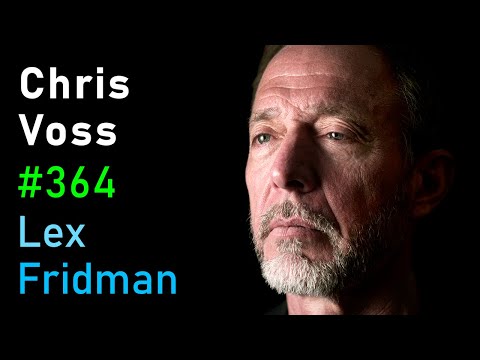 ▶ 播放视频
文稿由本站用 Qwen3-ASR(基于官方发布音频)机器转写,可能有识别错误,人名与数字请以音频为准。
Lex Fridman Podcast #364 - #364 – Chris Voss: FBI Hostage Negotiator
Machine transcription by Qwen3-ASR 0.6B (MLX, local, Apache-2.0). May contain recognition errors.
The following is a conversation with Chris Voss, former FBI hostage and crisis negotiator, and author of Never Split the Difference: Negotiating as if your life depended on it. And now a quick two second mention of his sponsor. Check them out in the description. It's the best way to support this podcast. We got Shopify for e commerce, Indeed for hiring great teams, and Inside Tracker for biological data. Choose wisely, my friends. Also, if you want to work with our team, we're always hiring. Go to lexfreeman dot com slash hiring. And now onto the full ad reads. As always, no ads in the middle. I try to make this interesting, but if you must skip them, please still check out our sponsors. I enjoy their stuff, maybe you will too. This show is also brought to you by Shopify, a platform designed for anyone to sell anywhere with a great looking online store that brings your ideas to life and tools to manage day to day operations. And it also taunts me, Lex. For being a lazy person, because I should have already set up a little shop for selling merch, which people have been asking me for—just a couple of T-shirts that allow you to celebrate a thing you are into, which I love doing. I am into a lot of stuff. I am a fan of a large number of podcasts. I wear their merch, I wear their shirts, bands. I have more Metallica shirts than I can count, and it's just wonderful to share the thing that brings you joy with the rest of the world. And then it starts a conversation, and then you are like, "You love Metallica too." I love Metallica, and then the rest of the conversation somehow flourishes. With a even a greater bigger than it otherwise might have, I guess it's a catalyst for the initial spark of um. Of a conversation that shares a kind of thread, you start at the thread and the thread creates a garden. There you go. Sign up for a one dollar per month trial period at Shopify dot com slash lex. All lowercase. Go to Shopify dot com slash lex to take your business to the next level today. And also yell at me if I haven't set up a Shopify store soon, please. I need your help. This show is also brought to you by Indeed, a hiring website. I've used them many times for the many hiring efforts I've done for the teams I've led in the past. I've recently actually had to write a few recommendation letters for people who I've worked with in the past. And I really enjoy doing that because it reminds me how awesome the people are. It kind of takes me back to those times. And those those months those years that you get to spend together on a difficult problem, you get to solve it together. The camaraderie of that, the struggles of that, the passions of that. The ups and downs. We are really hopeful one day, and then there is all these problems and you think the ideas you are doing are totally stupid and it's not going to work out and you kind of. Like can't quite figure out the puzzle of it, and you might have to start over completely. You have to backtrack all of that—the full mess of that—and you get to share that together. And ultimately, at least for the things I've worked on, there is a mission, there is a dream to understand something deeply or to help a large number of people, and that just gives a whole journey of struggle together meaning. I'll mention that because the process of building up a team, the process of hiring a team, is so important because a great team is so important—not just the success of the company or research group or anything you are doing relationships. It's also just a source of happiness. So use the best tools for the job of building the team, and Indeed is an incredible tool. Indeed knows when you are growing your own business. Every dollar counts. That's why with Indeed you only pay for quality applications that match your job requirements. Visit indeed dot com slash lex to start hiring now. That's indeed dot com slash lex. Terms and conditions apply. Cost per application pricing not available for everyone. This show is also brought to you by Inside Tracker, a service I use to track biological data. An interesting small scale example of that. Perhaps you can hear it from my nose at the moment. Is that I started getting allergies as nature wakes up from its winter slumber. And I think it's already a year ago, maybe a little bit over than that. I got a test for different things I am allergic to. And they put different things on your skin. It's like this grid, and you get to see what are the things that you are allergic to based on. That little grid cell of the skin having an allergic reaction, and I was not allergic to most things, but there is a few that stood out. It's an interesting little data point, right? It's probably true that over time that changes. Maybe across a period of months and years, based on the medication you take, based on environmental conditions, based on your diet—all that kind of stuff—and so it'd be nice to do that same test over and over and over to get a sense of how my allergic reaction to the world around me changes. Okay. There is a million things like this, and the core to you making a good effective decision on what you should do with your life—lifestyle, health, diet, whatever. Is to ground that in data. So the core to the allergy thing is data. The core to everything inside Tracker does is data. I am really excited about personalized data-driven advice for how to make your life better. Get special savings for limited time when you go to insidetracker dot com slash lex. This is Alex Friedman podcast to support it. Please check out our sponsors in the description. And now dear friends, here is Chris Voss. What is it like negotiating for a hostage with a kidnapper? What is the toughest part of that process? The toughest part is if it looks bad from the beginning, and you got to engage in a process anyway. What are the factors that make it bad? That that makes you nervous that if you were to observe a situation whether it's general negotiation or it's a hostage negotiation. What makes you think that this is going to be difficult? If they want to make it look like they're negotiating, but they're not. Like in the two thousand four time frame, Al Qaeda in Iraq was executing people on camera for the publicity. And they wanted to make it look like they were negotiating, so they'd come on and they say, "If you don't get all the women out of Iraqi women out of the jails in Iraq in seventy two hours, we're going to kill a hostage." It was one of the demands in one of the cases in that time frame. Now first of all, even if we'd have been willing, the U.S. government coalition would have been willing to do that. It wouldn't have been able to happen in seventy two hours. So is it an impossible ask from the beginning? And so then that looks really bad. Like they're they're trying to make it they're trying to make it look like they're talking reasonably, and but they're not. So your hostage is in bad shape there. If they made a demand. That you just even if you wanted to do you couldn't do, so then what makes that very difficult is in kidnappings especially. You are working with family members. You are coaching people. Bad guys are in touch with family members, or if they're not directly in touch with family members, the other thing that Al Qaeda was doing at that time was. They didn't give us a way to talk to them. They make they're making statements in the media, but then not leaving their phone number if you will. Yeah. So that's one more thing. Like they're intentionally blocking you. They're asking you to do something you can't do. Then I've given you a way to talk to them. So you got to get with the family and discuss with the family how you are going to approach things. Now the family definitely wants to know is this going to help? There is a bunch of cases like that in that time frame. And you got to be honest with them. It's a long shot. Our chance is here slim and none. And when it's slim and none, I'll take slim, but it's still very very slim. And there were a number of people that were killed in that time frame before the tide finally got turned, and it was it was hard dealing with families at the time. Can you negotiate in public versus like a direct channel in private? Oh yeah, bad guys pick the media. They're making statements in the media, so and that's a big clue. Their their channel of choice tells you an awful lot. And if they're choosing the media, then that means there is people are trying to appeal to. That means in their view, there is such a thing as good media. So if there is good media, there is bad media. How do you make it bad? And we made it bad for them. It just unfortunately it had to go through a number of iterations before they got the message and quit. In that negotiation, do you think about the value of human life? Is there a dollar figure? Is there how how do you enumerate not enumerate quantify the value of human life? Yeah, that's it's like beauty in the eye of the beholder. So that was the first lesson on any hostage negotiation—really any negotiation. Like it doesn't matter what it is to you, matters what it is to the other side. One of the things, especially in your in your conversation I listened to with that Andrew. By the way, you guys, I another thing I really liked about that conversation. First of all, I think the world of him. Andrew Huberman. Yeah, Andrew Huberman, and you released it on my birthday. I appreciate that. It was nice birthday present to me perfectly just for you. Yeah, nice job, thank you. But empathy is in the eye of the beholder. In every negotiation, whether it's over a car, a house, collaboration in your company with the bad guys, how does the other side see it? Now the nice thing about kidnapping for ransom if there if there is an actual ransom demand, it's an actual demand. Is it's a mercenary's business? They're going to take what they could get, and they tend to be really good. At figuring out how much money somebody has, so and again I'll keep drawing business analogies. You are looking for a job with an employer. There is a market price of the job, and then there is what the employer can pay you. Now maybe the market price of the job markets one hundred fifty grand. Employer can pay one twenty. But it's a great job, you know. We were talking about Elon a minute ago. Like I'd work minimum wage to follow him around. You know that would be worth it. What are the value other than the dollars? And how hard is it to get the dollars? And how quickly can you get to them? Those these are all things that the bad guys are good in kidnapping are good at figuring out. So the value of human life to them is going to be what can they get? A crazy thing in the kidnap business. We used to get asked by FBI leadership, when is this going to be over? And the answer would be when the bad guys feel like they've gotten everything they can. Now dissecting that statement. You are talking about when they feel like they got everything they can. So the key to kidnapping negotiations are the feelings of the bad guys. We're talking about feelings kidnappers' feelings. Which drives everything. Doesn't matter what human endeavor it is. So it's not reason, it's emotion. There is no such thing as reason. I should say, for a little bit of context, I just talked yesterday with a guy named Sam Harris. I don't know if you know Sam, but Sam and because I was preparing for a conversation with you. I talked to him about empathy versus reason, and he lands heavily on reason. Yeah, empathy is somewhere between useless and erroneous and leads you astray and is not effective. That reason is the only way forward. Well, let's draw some fine lines there, and the two fine lines I would draw is first what is your definition of empathy, and then secondly. How do people actually make up their minds? And I am and I am going to flip it. I am going to go with how people make up their minds. You make up your mind based on what you care about. Period. That makes reason emotion based. What do you care about? You start with what you care about. You see some guy swimming out in off the coast of the ocean, and you see a shark coming up behind him. Who are you cheering for? If it's Adolf Hitler out there, you are cheering for the shark. You might actually feel bad for the shark because it's going to it's going to taste bad. Who do you care about? You mean the human will taste bad? Yeah, you know he eats Adolf Hitler. You know it's going to leave a bad taste in your mouth, even if you are a shark. So you making up your mind on every circumstances based on what you care about. So then what does that do to reason? Your reason is based on what you care about from the beginning. Now then empathy. If you define it as sympathy, which it was never meant to be sympathy ever. You know, I've etymology. I think it's the word. I keep getting etymology and etymology mixed up. Etymology being right, where words came from, the origin etymology being bugs. Got it right. So I like etymology. Where did something come from? I also like etymology. Anyway, etymology. My understanding from my research. The original definition of empathy was an interpretation of a German word, where people were trying to figure out what the artist was trying to convey. It was about assessing art. And so was always about understanding where somebody was coming from, but not sharing necessarily. That same thing. So then when I was with the FBI and I first started collaborating with Harvard, Bob Menouken wrote a book. Beyond winning second chapter's attention between empathy and assertiveness. Still the best chapter on empathy I've ever read anywhere. And Bob writes in his book, Bob was the head of the program on negotiation. He's also agreed to be interviewed for a documentary that about me and my company. That hasn't been released yet, but it should be released sometime this year. What's the name of the documentary? Tactical empathy. Good name. So Bob's definition of empathy said not agreeing. Or even liking the other side, don't even got to like them. Don't got to agree with them, just straight. Understanding where they're coming from and articulating it, which requires no agreement whatsoever. That becomes a very powerful tool, like ridiculously powerful. And if it if sympathy or compassion or agreement are not included, you can be empathic with anybody. I was thinking about this. When I was getting ready to sit down and talk to you because you use the word empathy a lot. Putin. I can be empathic with Putin. Easy, it's easy. I don't agree with where he's coming from. I don't agree with his methodology. Early on the Ukraine Russian war, I saw an article that was very dismissive of Russia. That said, Russia's basically Europe's gas station, and I thought, all right. So if you are in charge, and the way you feed your people is via an industry that the entire world is trying to quit. The whole world is trying to get out of fossil fuels. If that's how you feed your people, if you don't come up with an answer to that, the people that you've taken a responsibility for are going to die alone in the cold in the dark. They're going to freeze and they're going to die. All right, so that doesn't mean that I agree with where he's coming from or any of his means. But where is how does this guy see things in his distorted word? You are never going to get through to somebody like that in a conversation unless you can demonstrate to them you understand where they're coming from, whether or not you agree. Early nineties, last century. I am a last century guy. I am an old dude. Refer to myself as a last century guy. Also deeply flawed human. Yeah. So terrorist case New York City civilian court terrorism does not have to be tried in military tribunals. That's a very bad idea. It was always bad. The FBI was always against it. I am getting ready. We have Muslims testifying in open court against a legitimate Muslim cleric. The guy that was on trial had the credentials as a legitimate Muslim cleric. The people that were testifying against him didn't think he should be advocating murder of innocent people. We'd sit down with them, Arab Muslims, Egyptians, mostly, and I would say to them, "You believe that there has been a succession of American governments for the last two hundred years that are anti-Islamic. " And they shake their head and go, "Yeah, and that be the start of the conversation. That's empathy. You believe this to be the case. I never said I agreed. I never said I disagreed. But I showed him that I wasn't afraid of their beliefs. I was so unafraid of them that I was willing to just state them. And not disagree or contradict because I I would say that and then I'd shut up and let them react. And I never had to say, 'Here is why you are wrong.' I never gave my point of view. Every single one of them that testified—that's empathy, not agreeing with where the other side is coming from. I am not sure how Sam would define it, but common vernacular is it sympathy and its compassion, and that's when it becomes useless. And there is a gray area. Maybe you can comment on it. Is sometimes a drop of compassion. Helps make that empathy more effective in the conversation. So you are just saying you believe X doesn't quite form a strong of a bond with the other person. You are imagining it doesn't. Maybe you are right. Yes, I am imagining it doesn't. I am imagining you need to show that you are on the same side. That you need to signal a little bit about your actual beliefs, at least in that moment, even if those that signaling is a. Is not as deep as it sounds, but at first you know basically patting the person on the back and saying we're on the same side, brother. You know that's that's what most people. When they're really learning the concept, that's the basic human reaction. And. In application, especially in highly adversarial situations. Like, I need, I need a regular guy Muslim, but how's that guy going to say, "Buy it if I like, you know, do it, I'm on your side." I've been there, I feel you. No, no, no, no, no. People get conned by that so much. Like, if we're on opposite sides of the table, and I try to act like I'm not on the opposite side of the table, that makes me disingenuous. So, I would rather be honest, my you know, my currency is integrity. And at some point in time, you go like, you know where I'm coming from. My answer is going to be like, look, I can agree on maybe where we're going, but if we're talking about, you know, am I on your side now as a human being? I want to see you survive and thrive, not at my expense. I think the world is full of opportunity. I'm optimistic. I got more than enough reason for saying that. Is enough for here for both of us. So I got no problem with you getting yours. You know, just don't take it out of my hide, and I'm going to be honest about it. About both of those things, I'm not interested in you taking it out of my hide. I think there's plenty here for both of us. Now I don't I don't need to be on your side except in a in a human. Sense, but I don't do I have to side with you over the war, no, or the how we're distributing the stock, or how much you get paid, or how much you make off this car. I think people, my experience as a layman, is that empathy's not got a downside. That you don't you don't need me to act like I'm on your side for us to make a great deal. Great deal. Well, we'll talk about two things: a great deal and a great conversation. Right, they're usually they're often going to be the same thing, but at times they're going to be different. That's a you mentioned Vladimir Putin. There is some zoom level at which you do want to say we're on the same side. You said the human level. It's possible to say kind of zoom out and say that we're all in this together, not we Slavic people, we Europeans, we, but we human beings. Same planet, same planet. Right. Several years ago, and his name is evidently been mud now, but he was very nice to meet lawyer here in town named Tom Girardi. And no shortage of bad reporting on him now. I have absolutely no idea if any of it's true. I do know that in my interaction with him, he was always a gentleman to me and was very generous. When he'd get into conversations with people, he'd always say like you know let's look at 10 years from now where we could both be in a phenomenal place together. Now let's work our way back from there. That's a good line. Yeah, and then you know I saw him do it in simulations. He I was teaching a USC. We were at a function together, and a gentleman at the time told me that that who he was and it was really influential. So I walked up to the guy cold and I said, "Hey, you know I'm going to come in and talk to my class at USC." He didn't know me other than the fact that we had mutual acquaintance, and he graciously consented to come in. And he said, "What do you want me to talk about?" And I said, "Look, dude, just from your success here, it doesn't matter what you talk about. You know either I'm going to agree or I'm going to disagree or I'm going to learn from it. My students are going to learn from it. So students want to role play with them. You know they dispute. You know I still negotiate every single time. He'd go to pick a point in the future where we're both happy. 10 years, 20 years from now, and let's work our way back. Now hostage negotiator, same thing. I call into a bank. Bad guy picks up on the picks up on the phone, and I'm going to say, "I want you to live. You know I want to see you survive this. You know whatever else goes with that. Let's pick a point in the future that we're both good with. " And then we work our way back. And people make also we're talking before about emotion and what you care about. People make their decisions based on their vision of the future. Like without question, there's I think there's a Hindu temple in the United States. Being has been or being assembled same way that the Hindu temples were in India 1000 years ago by hand volunteers by hand. That these people are knocking themselves out for a place in paradise a vision of the future. What you will go through today if the future portends what you want you you'll go through incredible things today. So it's a vision of the future. So you have to try to paint a a vision of the future that the the person you're negotiating with will like. Just tough to do. Let's find out what their vision of the future is, and then remove yourself as a threat. Sure, you know if we can collaborate together. At all, if if you think that I could do anything at all to help you to that point, and you know integrity is my currency. I'm not going to lie to you, which gets back before that I lied to you about whether or not I'm on your side. You know right now at the moment we're on opposite sides of the fence. That's not going to stop us from being together in the future. Inside you're going to say, "Well, you didn't lie to me about today. Maybe you won't lie to me about tomorrow." So going back to world leaders, for example, whether it's Vladimir Zelensky or Vladimir Putin, you don't think it closes off their mind to show that. You have a different opinion, depending upon when you showed it. Is that is are you arguing from the beginning or are you displaying understanding from the beginning? I don't I don't think it stops you from being adversarial. That was the thing about Menounkin's. The chapter in his book, the tension between empathy and assertiveness. I remember reading that reading that name of the chapter thinking like you know. In my business, there is no tension, and then I got into it and I read I thought this is Red Herring. He's drawing people in because his entire chapter is that empathy puts you in a position to assert, and that there is no tension. It's a sequencing issue, and that's why again I think it's it was written for lawyers. Yeah, sequencing issue. The timing is everything. So you emphasize the importance of in terms of sequencing and priority of listening. Of truly listening to the other person. I'm sorry, what did you say? That was a bad joke. Sorry, your timing is just perfect. How do you how do you listen? How do you truly listen to another human being? How do you notice them? How do you really hear them? I always hated the term active listening. If anything, it's proactive, and as soon as you start to try to anticipate where somebody's going, you're dialed in more. Um, because along the way, either you're congratulating yourself for being right, or when suddenly they say something that surprises you, you really notice it. Like that's not what I expected. You're dialed in, you're listening, so it's it's. Proactive and then one of the reasons you know we named the book tactical empathy. Name the book, never split the difference, but we're talking about tactical empathy. Calibrated emotional intelligence. What's a calibrated by? First, it was experiences hostage negotiators, but and we've come to find out that our experiences hostage negotiators. Is backed up by neuroscience. Another reason why I listen to Andrew Huberman's podcast all the time—heavy, heavy, heavy, heavy on the neuroscience. And so then emotional intelligence calibrated by what we know about neuroscience. What do we know about neuroscience? And I'll talk about it from a layman's perspective and and to even say we's an arrogant thing, you know human beings. I didn't do the research. I'm scooping up as much of it as I can as a layman. The brain's largely negative. I think there's ample evidence people would argue with you as to what the wiring is and what does what. And the limbic system and all of that, but the brain is basically 75 negative. As an layman, I make that contention. Number one, number two. The best way to deactivate negativity is by calling it out, and I could say, "Look, I don't I don't want you to be offended by what I'm getting ready to say. That's a denial. Your guard is up. You're getting ready to get mad. If I say what I'm getting ready to say is probably going to offend you. " Now you relax a little bit, and you go, "All right, what is it? " And then I say it, whatever it is, and you're going to be like, "Oh, that wasn't that bad. " Because we knew from hostage negotiation by calling out the negativity deactivated, and then number of neuroscience experiments have been done right and left by calling out negativity, deactivating the negativity. Calling out ahead of time, so like acknowledging that this is that this is ahead of time that this is going to hurt. The experiments that I've seen have been when the negativity was inflicted and then having a person that it was being inflicted upon simply identify it. Just identify. Yeah, what are you feeling? I'm angry and the anger goes away. It's tough because I've had a few, and again we're dancing between things, but I've had a few conversations where anger arose in the guest I spoke with. Yeah, and I'm not sure identifying it. That that that's like leaning into it and going into the depths. Because that's going to the depths of some emotional psychological thing they're going through. That I'm not sure I want to explore that iceberg with a little ship we got. It's a you have to decide do you want to avoid it. I do want to lean into it. It's a tough choice. Elephant in the room. It is an elephant in the room. It is an elephant, especially when I think that's the big difference between conversations and negotiations. Negotiation ultimately. Is looking for closure and resolution. I think general conversations like this is more exploring. There's not necessarily a goal. Like if you were to put like if I had to put a goal for this conversation, there's no real goal. It's curiously exploring ideas. So that gives you freedom to not call out the elephant for for time. You could be like, "All right, let's go to the next room, get a snack, and come back to the elephant." Right. All right, so I'd make a tiny adjustment on the negotiation definition. Sure, because you said I think seeking closure. Um, it used two words. Enclosure was one of them. Goals, maybe another. Well, yeah, what is what is negotiation? Well, I would say seeking collaboration. And because closure kind of puts a little bit of a finality to it, and a real problem in any negotiation is always implementation. It's why we say yes is I say yes is nothing without how. And yes, and it's at its very best is only a temporary aspiration. It's aspirational. It's usually counterfeit. So if you're looking for, that's a good line. Yes is usually counterfeit. It's aspirational without the how. Yeah, it's just a good line. Yeah, thank you. I've been working on it. I was practicing. I in front of the mirror for two minutes. Pretty good. You got a bright future. You should write a book or something. Yeah, your book is excellent. By the way, thanks. Appreciate that. What am I doing here anyway? This on Earth in general, you with you. I don't know. We're collaborating. Why me though? Why why why do you want to talk to me? I've heard you speak in a few places. I was like, "This this is a fascinating human." Um, I think on Clubhouse and different places, and I I listen to some YouTube stuff, and this is. Just you meet people that are interesting. That that's that's what I love doing with this podcast is just exploring the mind of an interesting person. You notice people sometimes you sometimes it's like a homeless person outside of 711. I notice who are you. Yeah, yeah, yeah, it's fascinating. It doesn't like I don't look at the resumes and the credentials and stuff like that. It's just being able to notice a person. As I've been leafing through the different choices of the podcast, the young lady that only fans and the sex workers. That's a fascinating human being. Like I want to know what makes that person tick at 1000. The fascinating thing about her is her worldview is almost entirely different than mine, and that's always interesting to talk to a person who just is happy. Flourishing, but sees the world and the set of values she has is completely different, and and is also not argumentative is accepting of other worldviews. It's beautiful to explore that. Yeah, no kidding, I would agree. And then yeah, thought provoking because I consider myself. Um, the word I was looking for before was abundant. I think it's an abundant world, so I'm pretty optimistic. I consider myself. I don't know happy exactly describes it, but yeah, you know I'm a so then if I'm happy optimistic abundant, I got a worldview, and then you run into somebody that has a vastly different worldview, and they're happy and they think it's abundant too. And you're like, "What is going on in your head or mine or what am I missing? " Yeah, so that's fascinating. And the pie grows, which is useful for kind of negotiation when you paint a picture of a future. If you're optimistic about that future, there's a kind of feeling like we're both going to win here. Exactly, and that's easy. We live in a world where both people can win. Yeah, and and in point of fact, that's the case. Although it's a lot of people want us to think otherwise. Mostly because the negativity that was talking about before, so the brain is generally cynical. Yeah, my description of it is the pessimistic cave man survived, and we're descendants of the pessimists. Yeah, optimistic guy got eaten by a saber tooth tiger. Yeah, but on the flip side, the optimists seem to be the ones that actually build stuff these days. There's a switch. Like, so at what point of time do we catch on? Because the difference between survival and success mindset. The success mindset is highly optimistic. So where do we switch, or how do we stay switched from survival to success? That's the challenge. Yeah, somewhere we stopped being eaten by saber tooth tigers and started building bridges and buildings and computers and companies, and we started to experience we got enough data back. To collaborate, and we stop listening to our amygdala and we start to listen to our gut. Let me just to return briefly to terrorists. What do you think about the policy of not negotiating with terrorists? Well, that's not the policy. First of all, now everybody thinks that's the policy. Yeah, it hasn't been the policy since 2002 when Bush 43 signed a national security presidential directive (NSPD) the time it was NSPD 12. Which basically said, "Um, we won't make concessions. That doesn't mean we won't talk. " So I'm in Colombia at the same time, and I have been intimately involved with the signing of him signing that document. I knew exactly what it said, and I and he didn't inherit it from somebody else. He signed it, and I'm in Colombia, and the number two in the embassy says. Last night on TV, the president of the United States said, "We don't negotiate with terrorists. Are you calling a president of the United States a liar?" And I remember thinking like, "All right, so he probably said that, and that's not on the document that he signed." So I said, "Look, you know I'm familiar with what he's signed, and that's not what it says. Well, you know, and so the argument, but that's always been the sound bite that everybody likes. We don't negotiate with terrorists. Depends upon your definition of negotiation. If it's just communication, we negotiate with them all the time. Number one and number two. Like every president has made some boneheaded deal with the bad guys. Like Obama released five high-level Taliban leaders from Guantanamo in exchange for an A Wale soldier that we immediately threw in jail. And I thought that was a horrible deal, and that that's putting terrorists back on a battlefield. And then Trump turned around and topped it by putting 5,000 terrorists back on a battlefield. So we haven't had a president that stick has stuck to that on either side of the aisle since people started throwing that out as a sound bite. What do you think of that negotiation? Forget terrorists, but the global negotiation like with with Vladimir Putin the recent negotiation over prisoners. The exchange, the Britney Grinder. Is there way to do that negotiation successfully? First of all, I agree with the idea that she was wrongfully detained and she and she didn't deserve to be in jail, and that U.S. government there should be no second class citizens ever. And whether you're an WNBA player or you're just some bonehead that walked into the wrong situation, your government should not abandon you ever ever. Now what they do in the meantime, there should have been a negotiation. They were desperate to make a deal at a bad time. They'd been offered far better deals in prisoner swaps earlier and turned them down. And then he gets turned up, and thank God for Britney Grinder that the public got enough attention. They kept pressure on the administration. They made a deal. Now governments want to make those kind of deals. That's fine, as long as it because that was basically a political negotiation. You're putting 5,000 Taliban back on a battlefield. That ain't negotiating with another government. You're putting five of them back on a battlefield. That ain't negotiating with another government. That's directly contradicting this thing that you claimed, and those were all bad deals. Was the Britney Grinder thing a bad deal? I think it was great for her. If I was in the middle of it, would have been better, and she still would have come home. Yeah, there's some technical aspects of that negotiation. What do you think is the value? Just the link on it of meeting in person for the negotiation. I think it's a great idea. Can I just just follow that tangent along? There's a war in Ukraine now. It's been going on over a year. It's a for me personally giving my life stories is is a is a deeply personal one and I'm returning back to that area of the world I was there. Volodymyr Zelensky said he doesn't want to talk to to Vladimir Putin. Do you think they could get in a room together? And say you were there in a room with Putin and Zelensky and Biden is sitting in the bag drinking a cocktail or maybe he is at the table participating. How is it possible through negotiation through the art of conversation to find peace in this very tense geopolitical conflict? I think it's eminently possible.
本集资源与出处
- 视频在 YouTube 收看
- 音频官方 MP3 直链来自 lexfridman.com 官方播客 RSS
- 官网Lex Fridman 官网本集页面
- 文稿本站纯文本版